
Iran and Iraq: Past, Present and Future – 2 Powerful Nations
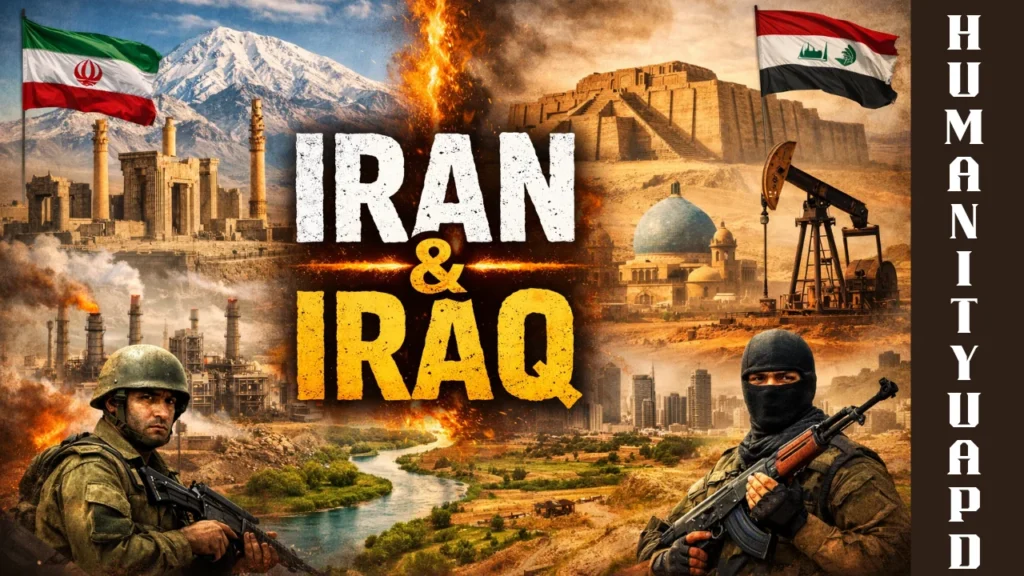
Iran and Iraq
Iran and Iraq occupy significant geographical positions in the Middle East, sharing a long border that has facilitated both cultural exchange and conflict throughout history. Iran, known as Persia in antiquity, is situated to the east of Iraq, bordered by countries such as Turkey, Armenia, Azerbaijan, and Afghanistan. With its diverse landscapes ranging from mountains to deserts, Iran is characterized by its rich natural resources, especially oil and natural gas.
Iraq, on the other hand, is located to the west of Iran and has been recognized historically as the cradle of civilization due to its location in the fertile region of Mesopotamia. This area is significant for its rivers, the Tigris and Euphrates, which have nurtured human settlement and cultural development since ancient times. The modern borders of Iraq are marked by its neighbors: Saudi Arabia to the south, Jordan to the west, and Syria to the northwest.
Historically, both nations have roots that extend back thousands of years and have been pivotal in shaping the culture and politics of the Middle East. Key events such as the Islamic conquests in the 7th century, the establishment of the Persian Empire, and the devastation of the Iran-Iraq War between 1980 and 1988 profoundly influenced the national identities and diplomatic relationships of Iran and Iraq. These events, along with ongoing socio-political developments, continue to impact both countries today.
Understanding the geographical and historical context of Iran and Iraq is essential for comprehending the complexities of their interactions and conflicts. By exploring these foundational elements, one can appreciate the intricate tapestry of relationships and events that define the modern realities of both nations.
👉 Table of Contents 👇
Geographical Characteristics
The geographical landscape of Iran and Iraq is defined by its diverse topography, climate variations, and rich natural resources. Iran, located in Western Asia, boasts an area of approximately 1.65 million square kilometers. The country features various geographical features such as the Zagros and Alborz mountain ranges, which significantly impact its climatic conditions and biodiversity. The mountains create a barrier that influences rainfall patterns, leading to arid conditions in central Iran while nurturing verdant valleys elsewhere.
In contrast, Iraq spans around 437,000 square kilometers and primarily consists of vast plains and plateaus, with the Tigris and Euphrates rivers central to its geography. These rivers have historically provided fertile land that has supported agricultural ventures and settlements for millennia. The flat terrain of Iraq not only shapes its climate but also serves as a conduit for the economy, supporting activities such as oil production, which is a pillar of its economic framework.
The climate in both countries varies significantly; Iran experiences a combination of arid, semi-arid, and Mediterranean climates, caused by its varied elevation and geographical features. Conversely, Iraq primarily features a hot desert climate, characterized by scorching summers and mild winters. Such climates influence local agriculture, with Iran benefiting from diverse crops spanning its temperate regions and the mountainous north, while Iraq largely focuses on crops suited to its hotter climate.
The natural resources of these nations are abundant yet diversely distributed, with Iran’s extensive oil and gas deposits positioned alongside valuable minerals and fertile lands supporting agriculture. Iraq, heralded for its significant oil reserves, is heavily reliant on this resource, thereby shaping its economic landscape. The geographical characteristics of Iran and Iraq thus play a vital role in shaping not only their economies but also the lifestyles of their inhabitants, leading to multifaceted cultural identities that reflect their environments.
Historical Context and Development
The histories of Iran and Iraq are interwoven, marked by a tapestry of civilizations that flourished over millennia. The region known today as Iran was once home to the ancient Persians, who established one of the world’s first empires. The Achaemenid Empire, founded by Cyrus the Great in the mid-6th century BCE, extended from the Mediterranean to the Indus River, setting the stage for various cultural and political dynamics still relevant in contemporary times. In parallel, Iraq, known as Mesopotamia, saw the rise of influential civilizations, such as the Sumerians, Akkadians, and Babylonians. These societies innovated in various fields, including writing, mathematics, and law, creating a legacy that has profoundly impacted human development.
As the centuries unfolded, both nations experienced the influence of various empires and conquerors. Following the Achaemenid period, Iran saw the invasion of Alexander the Great and later became part of the Sassanian Empire. In contrast, Iraq was subsequently integrated into numerous empires, notably the Islamic Caliphate, which forged a prominent role in the region’s cultural and religious identity. The Islamic Golden Age catalyzed advancements in science, medicine, and philosophy, largely influenced by scholars from both nations.
The 20th century brought significant challenges marked by colonialism, political unrest, and revolutionary movements. In Iran, the 1979 Islamic Revolution redefined its governance, transitioning from a monarchy to an Islamic republic. In contrast, Iraq faced extreme political changes, most notably the rise of Saddam Hussein in the late 20th century, culminating in a Gulf War and subsequent invasions. This era of turmoil shaped the geopolitical landscape of both nations, resulting in sectarian divisions and a struggle for power that continues to affect their relations and development.

Demographics and Culture
Iran and Iraq, two neighboring nations with rich histories, showcase a diverse range of demographics and cultural practices that contribute to their unique identities. Iran, with a population of approximately 85 million, is predominantly Persian, which forms the majority ethnic group. However, it is also home to significant ethnic minorities, including Azeris, Kurds, Lurs, and Arabs. In contrast, Iraq’s population of around 41 million is largely Arab, while the Kurds represent a notable ethnic group, particularly in the northern part of the country. This ethnic diversity is integral to the cultural dynamics within both nations.
A key aspect of the cultural identities in Iran and Iraq is the languages spoken. Persian, known locally as Farsi, is the official language of Iran and is spoken by the majority. In Iraq, Arabic serves as the official language, though Kurdish has gained official status in the autonomous Kurdistan Region. Other minority languages, such as Turkish and Assyrian, speak to the linguistic richness present in both countries and highlight their respective historical influences.
When it comes to cultural practices, Iran and Iraq share some similarities, particularly in art, literature, and traditions rooted in shared historical events and religions. Both nations have a vibrant literary scene, producing famous poets and writers such as Rumi and Hafez in Iran, while Iraq is known for its contributions to ancient literature and modern writers like Al-Safir. Traditional crafts, music, and culinary practices further reflect the intertwined cultural heritages of these countries, with influences ranging from Zoroastrianism in Iran to Islamic traditions that permeate both societies. While there are notable distinctions, particularly in cultural celebrations and religious practices, together they form a rich tapestry that is reflective of a long and complex history.
Economic Overview
The economies of Iran and Iraq are significantly influenced by their abundant natural resources, particularly oil and gas. Both nations hold some of the largest proven oil reserves in the world, which play a crucial role in their economic frameworks. In Iran, the energy sector contributes heavily to GDP and government revenues, with oil exports accounting for a substantial portion of foreign earnings. Conversely, Iraq’s economy is heavily reliant on oil, which constitutes about 90% of its revenue. The volatility of oil prices can create considerable challenges for both economies, particularly in times of fluctuating global demand.
However, the economic landscape in Iran and Iraq is fraught with challenges. Iran faces stringent international sanctions that have impeded its economic growth and limited its access to global markets. These restrictions have exacerbated existing issues, including high inflation and a declining currency value. Internal policies in Iran have also been criticized for their inefficiency and lack of transparency, which further stifles potential growth.
Iraq, on the other hand, has struggled with political instability and conflict, which have hindered effective economic development. The lack of diversification of its economy, which remains heavily reliant on oil, makes it vulnerable to the impacts of global oil price declines. Moreover, the reconstruction efforts following periods of warfare have revealed significant deficiencies in infrastructure, health services, and education systems that are essential for fostering a robust economy.
Both countries are working to develop non-oil sectors and improve their economies. In Iran, sectors such as agriculture and manufacturing are being promoted as alternatives to oil dependency. Meanwhile, Iraq is attempting to encourage foreign investment and rebuild its infrastructure to support economic growth. The path forward for both nations hinges on overcoming internal and external economic challenges, fostering effective policies, and reinvigorating international trade relations.
Environmental Issues and Climate Change
Iran and Iraq are currently grappling with significant environmental challenges, which are exacerbated by the impacts of climate change. One of the most pressing issues is water scarcity, which has severe implications for agriculture and overall quality of life. Both countries have experienced reduced rainfall and dwindling river flows, primarily due to climate change and poor water management practices. This situation threatens agricultural productivity, particularly in regions that rely heavily on irrigation.
Moreover, pollution in various forms poses additional threats to the environment and public health. In urban areas, air quality continues to deteriorate, primarily due to industrial activities and vehicular emissions. The burning of fossil fuels contributes to increased levels of particulate matter and greenhouse gases, which adversely affects respiratory health and overall well-being. Additionally, both Iran and Iraq struggle with water pollution, stemming from industrial runoff and inadequate waste management systems. Contaminated water supplies not only harm ecosystems but also create health risks for the populations that depend on these resources.
The effects of climate change are not limited to water scarcity and pollution; they also pose challenges for biodiversity and natural ecosystems. As temperatures rise and weather patterns shift, both countries face the risk of desertification, which can diminish arable land and affect food security. For agricultural communities, changes in climate can disrupt traditional farming practices, necessitating adaptations to new crop varieties and cultivation techniques.
Addressing these environmental issues requires concerted efforts from both governments and international organizations. Initiatives aimed at improving water resource management, reducing pollution, and implementing climate resilience strategies are essential to mitigate the adverse effects of climate change on agriculture, health, and overall quality of life in Iran and Iraq.
Conflict and Security Landscape
The geopolitical landscape of Iran and Iraq has been profoundly shaped by a series of conflicts that have had lasting ramifications for both nations and the broader region. One of the most significant of these conflicts is the Iran-Iraq War, which lasted from 1980 to 1988. This devastating war, rooted in territorial disputes and ideological differences, resulted in extensive casualties and economic devastation for both countries. The war was characterized by trench warfare, extensive use of chemical weapons, and it left a legacy of deep-seated animosity that continues to influence bilateral relations.
Following the Iran-Iraq War, the dynamics of conflict in the region evolved. The 2003 invasion of Iraq by the United States marked another significant upheaval, leading to the toppling of Saddam Hussein’s regime. This intervention altered the security landscape dramatically, creating a power vacuum that allowed for the rise of various militant groups, including the emergence of ISIS. The instability that ensued has had far-reaching implications, not only for Iraq but for Iran as well, as both nations grapple with sectarian strife and the influence of foreign powers seeking strategic advantage.
The ongoing regional tensions are fueled by a mix of historical grievances, ethnic divisions, and the influence of external actors. Iran, primarily a Shia-majority country, and Iraq, which hosts a significant Shia population alongside Sunnis and other minorities, exhibit complex social dynamics intertwined with their respective security policies. These complexities raise questions about the prospects for stability and cooperation in a region marked by relentless conflict. The interplay of domestic politics, regional ambitions, and international relations continues to pose challenges for peace and security in Iran and Iraq.

Scientific and Technological Progress
The advancement of science and technology in Iran and Iraq contributes significantly to various fields including medicine, engineering, and environmental science. These countries have made notable strides in research, addressing pressing regional challenges while also partaking in global scientific discourse.
In the field of medicine, Iran has developed a robust healthcare and pharmaceutical sector, becoming a regional leader in biotechnology. Iranian researchers have successfully produced numerous generic medications and are involved in significant clinical trials aimed at tackling diseases relevant to both local and global communities. Moreover, advancements in telemedicine and digital health technologies have improved access to healthcare services, especially in remote areas.
Iraq, on the other hand, has focused its scientific efforts on rebuilding its healthcare infrastructure post-conflict. Despite facing numerous challenges, Iraqi universities and research centers are working to develop new medical techniques and rehabilitate the population affected by past wars. Collaborative projects with international universities have emerged to enhance medical education and public health initiatives.
Engineering is another vital area where both countries have seen progress. Iran has invested heavily in civil and mechanical engineering projects, which include infrastructure development and renewable energy systems. The nation has engaged in significant research aimed at innovating low-cost and sustainable engineering solutions, which are crucial for economic growth.
In Iraq, efforts remain focused on modernizing engineering practices and rebuilding essential infrastructure, such as transportation and water management systems. Ongoing training programs aim to elevate local engineering expertise, thereby facilitating technology transfer and sustainable development.
Environmental science has also garnered attention, with researchers exploring ways to address issues such as water scarcity and pollution. Collaborative regional projects between Iran and Iraq aim to enhance environmental protection, ensuring sustainable use of natural resources and promoting eco-friendly technologies. Such initiatives reflect a commitment to scientific and technological progress for the betterment of society in both nations.
Frequently Asked Questions about Iran and Iraq
Both Iran and Iraq are rich in history, culture, and landscape, prompting numerous inquiries from travelers, scholars, and those interested in the geopolitical dynamics of the region. Below are some frequently asked questions that address common concerns and curiosities regarding these two neighboring countries.
Is it safe to travel to Iran and Iraq?
The safety of traveling to Iran and Iraq can vary significantly. While Iran has a reputation for welcoming tourists and relatively low crime rates, travelers should remain vigilant due to regional tensions. Iraq, on the other hand, has faced extensive conflict; therefore, some areas may be safer than others. Travelers should stay updated on travel advisories from their respective governments.
What is the best time to visit these countries?
The best time to visit Iran is during spring (March to May) and autumn (September to November), which offer mild weather ideal for exploring its historical and natural sites. For Iraq, springtime is also favorable, especially for cultural events and festivals, whereas summers can be exceptionally hot.
What cultural norms should tourists be aware of?
Both countries have unique cultural norms shaped by their rich histories and traditions. In Iran, it is advisable to dress modestly, particularly for women, who should cover their heads and wear loose-fitting clothing. In Iraq, similar modesty is required, especially in rural areas. Understanding and respecting local customs can enhance the travel experience.
Are there language barriers?
Persian (Farsi) is the official language of Iran, while Arabic is predominantly spoken in Iraq. While younger populations in urban areas may speak English, it is beneficial for travelers to learn basic phrases in Persian or Arabic to better communicate and engage with locals.
How has the economy of Iran and Iraq been affected by recent conflicts?
The economies of both nations have been significantly impacted by ongoing conflicts and sanctions. Iran has faced economic challenges due to international sanctions affecting oil exports, while Iraq has concentrated on rebuilding its infrastructure and economy post-conflict. Understanding these economic contexts can provide deeper insights into both countries.

Share this:

Discover more from HUMANITYUAPD
Subscribe to get the latest posts sent to your email.