
Major Humanitarian Issues Facing the World Today (2026)
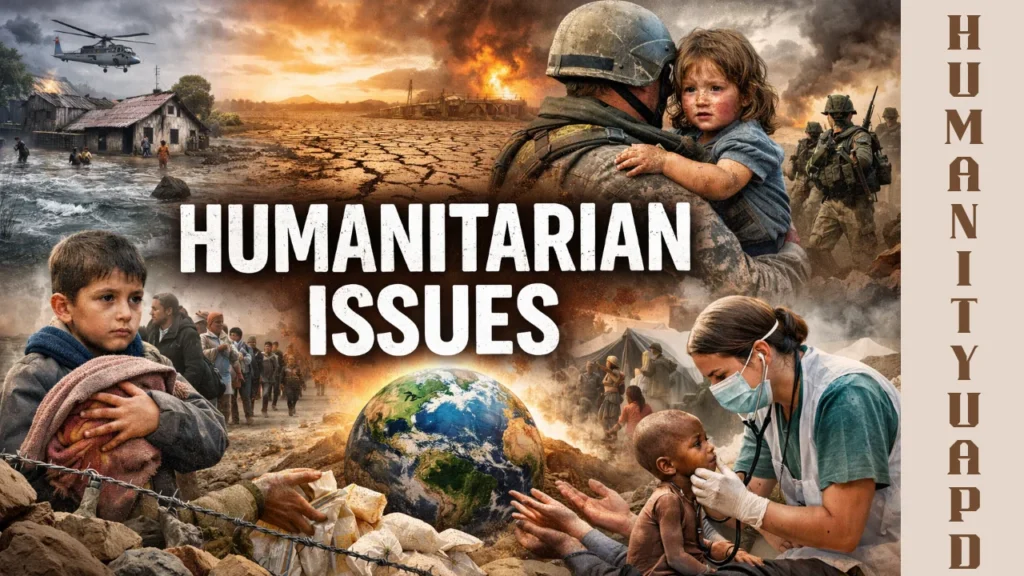
Humanitarian Issues
Humanitarian issues encompass a wide range of challenges and crises that impact human life and dignity, often demanding urgent responses from the global community. At the heart of humanitarianism lies the commitment to alleviate suffering, protect human rights, and provide assistance to individuals and communities facing distressing circumstances. The term “humanitarian” generally refers to actions that prioritize human welfare, particularly in times of conflict, natural disasters, and social upheaval.
Humanitarian crises can be defined as urgent situations in which large groups of people are unable to meet their basic needs due to factors such as armed conflict, environmental disasters, disease outbreaks, or systemic poverty. Such crises often lead to significant loss of life, displacement of populations, and long-term societal disruptions. Therefore, a clear understanding of these issues is crucial for developing effective strategies and interventions. By identifying the root causes and manifestations of humanitarian crises, stakeholders can mobilize resources and design evidence-based interventions that target the specific needs of affected populations.
Addressing humanitarian issues requires a multi-faceted approach, integrating insights from various disciplines such as medicine, social sciences, and public policy. This science-based perspective is essential for ensuring that responses are not only timely but also tailored to meet the complex realities faced by vulnerable populations. Moreover, employing a scientific lens fosters accountability and transparency in humanitarian actions, offering a framework for evaluating their effectiveness and impact.
As we delve deeper into the intricacies of humanitarian issues, it is vital to remain informed about the evolving landscape and the diverse factors contributing to crises worldwide. This post will explore the definitions, implications, and responses to humanitarian challenges, with an emphasis on the importance of evidence-based approaches in alleviating human suffering.
👉 Table of Contents 👇
Types of Humanitarian Issues
Humanitarian issues arise from various complex factors and can be categorized into several distinct types. Each category has unique causes, consequences, and populations that are particularly vulnerable. Understanding these types is fundamental for addressing the specific needs of affected individuals and communities.
One prevalent type of humanitarian issue is natural disasters, which includes events such as earthquakes, floods, and hurricanes. These disasters can lead to significant loss of life, displacement of populations, and destruction of infrastructure. The consequences often extend beyond immediate physical harm, resulting in long-term economic instability and challenges in accessing essential services.
Armed conflicts represent another major category of humanitarian issues. Wars and civil unrest cause widespread devastation, leading to destruction of communities and loss of livelihoods. The psychological trauma experienced by affected populations can linger long after the conflict has ended. Many individuals become refugees, fleeing violence and seeking safety in other regions or countries.
Relatedly, the refugee crises can arise from both armed conflicts and natural disasters. The displacement of individuals and families creates urgent humanitarian needs, including food, shelter, and medical care. Refugees often face hostilities and discrimination in new environments, further complicating their situation.
Lastly, poverty is a continuous humanitarian issue that exacerbates the effects of other crises. It can limit access to essential resources such as clean water, education, and healthcare, making populations more susceptible to disasters and conflicts. Addressing poverty requires comprehensive strategies that take into consideration the interconnected nature of these issues.
In summary, various humanitarian issues, including natural disasters, armed conflicts, refugee crises, and poverty, each present unique challenges that require targeted responses. It is crucial to understand the causes and consequences of each type to foster effective strategies for humanitarian assistance.
The Impact of Climate Change on Humanitarian Crises
Climate change is increasingly recognized as a significant factor exacerbating humanitarian crises across the globe. Its effects are not only environmental but also deeply social, intertwining with issues such as poverty, security, and health. The scientific consensus indicates that climate change intensifies the frequency and severity of natural disasters such as hurricanes, floods, and droughts. According to the Intergovernmental Panel on Climate Change (IPCC), it is anticipated that climate-related disasters will become more common in the coming decades due to shifting weather patterns.
One of the most devastating effects of climate change is the displacement of populations. Rising sea levels, intensified storms, and prolonged droughts force communities to leave their homes, resulting in an estimated 20 million displaced persons annually. This displacement not only poses immediate humanitarian challenges but also strains resources in host communities, leading to conflict and instability. The World Bank suggests that by 2050, as many as 140 million people could be forced to migrate due to climate-related pressures, particularly in regions like Sub-Saharan Africa, South Asia, and Latin America.
Resource scarcity is another critical outcome of climate change that directly impacts humanitarian issues. As natural resources such as water and arable land become increasingly limited, competition for these vital resources can lead to conflict. For example, a study published in the journal Nature indicates that water scarcity can exacerbate tensions in regions where communities rely heavily on limited water supplies for agriculture and living purposes.
The interplay between climate change and humanitarian crises underscores the need for a proactive response. Understanding and addressing these issues through a scientific lens can help develop strategies that mitigate the adverse effects of climate change and ultimately support affected populations in a meaningful way.

Public Health and Humanitarian Issues
The relationship between public health and humanitarian issues is paramount, especially in the context of conflict zones and disaster-affected regions. Humanitarian crises often exacerbate vulnerabilities in health systems, leading to the rapid spread of infectious diseases. These public health challenges are compounded by factors such as displacement, overcrowding, inadequate sanitation, and compromised healthcare infrastructure. As individuals flee conflict or natural disasters, they frequently find themselves in environments where exposure to pathogens is markedly increased.
One significant public health concern arising from humanitarian crises is malnutrition. When food systems are disrupted by conflict or disaster, populations can face acute food shortages. Malnutrition severely impairs immune functions, making individuals, especially children and pregnant women, more susceptible to diseases. Addressing malnutrition must be a priority in humanitarian responses, as it is fundamentally linked to overall public health outcomes. Efforts to provide nutrition support can help mitigate the impacts of malnutrition on health.
Access to clean water is another critical element of public health within the context of humanitarian crises. Contaminated water sources lead to waterborne diseases, which can cause significant morbidity and mortality. Humanitarian organizations must prioritize the distribution of safe drinking water and sanitation services to reduce the risk of disease outbreaks. Moreover, establishing healthcare services in these environments is essential for addressing acute health issues, managing chronic conditions, and providing preventative care to vulnerable populations.
In conclusion, the intersection of public health and humanitarian issues requires multifaceted, evidence-based approaches that address the immediate health needs of affected populations while also laying the groundwork for long-term recovery and resilience against future crises.
Emergency Response and Humanitarian Aid
Emergency response and humanitarian aid are critical components in addressing crises resulting from natural disasters, armed conflicts, and other catastrophic events. These situations call for rapid and effective action to provide relief and support to affected populations. Humanitarian organizations, ranging from international agencies like the United Nations to local NGOs, play a vital role in these efforts by coordinating responses, delivering aid, and implementing recovery strategies.
The logistics of delivering humanitarian aid, especially in emergency situations, are complex and require careful planning. This includes the transportation of supplies, setting up distribution points, and ensuring that aid reaches those who need it most. Scientific evaluations of various response strategies have shown that a well-organized logistics plan greatly enhances the effectiveness of humanitarian responses. For instance, utilizing technology for mapping and data collection can optimize resource allocation and minimize delays in assistance.
Different frameworks have been developed to structure emergency responses efficiently. One such framework is the Sphere Standards, which establishes minimum humanitarian standards in humanitarian interventions. These guidelines emphasize accountability, quality, and the involvement of affected communities in the decision-making process. In addition, the Inter-Agency Standing Committee (IASC) provides a platform for coordination among various actors in humanitarian situations, thereby improving the collective response. The effectiveness of these strategies hinges on adapting them to the unique context of each emergency, ensuring that cultural sensitivities and local needs are met.
In conclusion, successful emergency response and humanitarian aid depend on well-coordinated efforts by various organizations, utilizing scientifically backed logistics and frameworks. By continuously assessing and refining these strategies, humanitarian actors can enhance the impact of their interventions, ultimately saving lives and alleviating suffering in times of crisis.
The Role of Policy in Mitigating Humanitarian Issues
Humanitarian issues arise in various contexts, often influenced by a lack of effective policies or by policies that do not prioritize human rights and humanitarian assistance. Both domestic and international policies play a critical role in determining how effectively communities can respond to crises and support those in need. Comprehensive legal frameworks exist, including the Guiding Principles on Internal Displacement and various international human rights treaties, which aim to mitigate the impact of humanitarian crises. However, the effectiveness of these laws largely depends on the political will of state actors and the mechanisms for accountability established within these frameworks.
At the domestic level, governments must enact and enforce legislation that protects vulnerable populations during emergencies. This includes ensuring access to essential services such as food, healthcare, and shelter, as well as establishing protections against discrimination. Initiatives like national disaster management policies can help streamline response efforts, but their success hinges on adequate funding, training, and coordination among different governmental and non-governmental organizations.
On an international scale, policy plays an equally vital role. International humanitarian law, primarily established through the Geneva Conventions, sets standards for human treatment during conflicts and disasters. Moreover, the roles of organizations such as the United Nations are pivotal in coordinating responses and providing necessary resources for humanitarian aid. However, geopolitical realities can often complicate the implementation of these norms, leading to discrepancies in how humanitarian policies are applied or respected in various situations. Studies have shown that while countries with robust humanitarian policies tend to respond more effectively to crises, the gaps in implementation reveal a pressing need for deeper reform and international cooperation.
Case Studies of Successful Interventions
In examining successful humanitarian interventions, it is imperative to highlight concrete examples that illustrate the effective application of science-based strategies. A notable case is the relief operation following the 2010 earthquake in Haiti, which devastated the nation and resulted in significant loss of life and infrastructure. The international response, led by organizations such as the United Nations and various non-governmental organizations (NGOs), implemented a data-driven assessment approach to prioritize needs. Using evidence collected from health assessments, the operation focused on providing immediate medical care, cholera prevention, and addressing food security. The incorporation of local knowledge facilitated the delivery of culturally appropriate services, ensuring greater community acceptance and engagement.
Another striking example can be found in the Syrian refugee crisis, where multiple agencies adopted innovative methods to assist displaced populations. The use of technology, such as mobile applications to provide crucial information about available services, optimized the distribution of food and medical aid. Furthermore, implementing cash-based assistance programs not only addressed immediate needs but also empowered families by allowing them to make choices reflective of their unique circumstances. This multifaceted approach fosters resilience, as it encourages self-sufficiency and helps recipients regain a sense of normalcy.
A different yet equally impactful case is the successful vaccination campaigns conducted in sub-Saharan Africa to combat polio. By employing a strategy based on community mobilization and collaboration with local health workers, these interventions drastically reduced the incidence of polio. The operation resulted in increased vaccination coverage rates, which were monitored through rigorous data collection, allowing stakeholders to adapt strategies as necessary. This exemplary case underlines the importance of leveraging local resources and expertise, demonstrating that effective coordination can lead to remarkable public health outcomes.

Challenges in Addressing Humanitarian Issues
Humanitarian crises are intricate and multifaceted, with various critical challenges impeding effective intervention. A primary obstacle is geopolitical tension, which frequently hampers cooperation among nations and complicates access to affected regions. For instance, the ongoing conflict in Syria has led to contentious negotiations, resulting in significant delays in delivering aid. Such geopolitical dynamics often determine which organizations can operate in a given area, directly impacting the flow of resources and relief efforts.
Moreover, funding deficits represent another considerable challenge. Many humanitarian organizations rely on voluntary contributions and grants, which can be unpredictable and insufficient to meet urgent demands. According to a report by the United Nations, funding appeals for humanitarian assistance are often underfunded, with only 61% of the needed $41 billion met in 2021. This scarcity of resources directly affects the ability of agencies to deliver essential supplies and services, exacerbating the suffering of affected populations.
Coordination among humanitarian agencies also presents significant hurdles. With numerous organizations operating independently in crisis zones, ensuring a unified response is critical yet challenging. The lack of effective collaboration can lead to overlaps in services and the possible neglect of specific needs. For instance, in the aftermath of the 2010 Haiti earthquake, several agencies operated in isolation, which complicated the distribution of aid and led to inefficient utilization of resources. Streamlining operations and enhancing communication among agencies could alleviate some of these issues, though this requires commitment from all stakeholders involved.
In summary, the challenges of addressing humanitarian issues are complex and interconnected. Geopolitical obstacles, funding shortages, and the need for enhanced coordination among agencies significantly affect the overall effectiveness of humanitarian interventions, highlighting the necessity for a cohesive and strategic approach to address such pressing matters.
FAQs on Humanitarian Issues
Humanitarian issues encompass a range of complex challenges affecting vulnerable populations worldwide. Below are common questions and misconceptions that often arise in discussions about humanitarian work.
What is a humanitarian issue?
A humanitarian issue refers to situations that threaten the welfare and dignity of individuals and communities. These can include natural disasters, armed conflicts, poverty, lack of access to healthcare, food insecurity, and violations of human rights. Humanitarian organizations work to alleviate suffering and provide essential support to affected individuals.
Are all humanitarian efforts the same?
Not all humanitarian efforts are identical; they vary significantly depending on the context, needs, and rights of those affected. Some initiatives focus on immediate relief, such as food and medical aid, while others emphasize long-term development and rebuilding. Each approach requires understanding local contexts and engaging with communities to ensure effective solutions.
Is humanitarian aid always effective?
While humanitarian aid aims to mitigate suffering, its effectiveness can depend on various factors, including the delivery mechanisms, recipient needs, and coordination among agencies. Challenges such as political interference, insufficient funding, and logistical obstacles can hinder the impact of aid. Continuous evaluation and adaptation of strategies are crucial to improve the overall effectiveness of humanitarian efforts.
How can individuals contribute to humanitarian issues?
Individuals can play a vital role in addressing humanitarian issues through donations, volunteering, and advocacy. By supporting credible organizations, raising awareness, and engaging in informed discussions, individuals can contribute to meaningful change in their communities and beyond.
Understanding humanitarian issues and their complexity is essential to fostering effective assistance and ensuring the long-term well-being of affected populations.

Share this:

Discover more from HUMANITYUAPD
Subscribe to get the latest posts sent to your email.